
The Secret Life of Pretend Play: Why Kids' Wall Art Sparks Imagination | Billie Blake Prints
Why Imaginative Wall Art Matters More Than You Think
One of my favourite things about teaching wasn't watching children complete worksheets or memorise facts. It was watching them play.
Give a child an empty cardboard box and within minutes it's become a pirate ship, a rocket headed for Mars or a magical castle. Place a fairy in a picture on the wall and suddenly she's no longer just artwork - she's the guardian of the bedroom. A sleepy bear becomes someone's best friend. A tiny astronaut is exploring distant planets before breakfast.
Children don't simply look at beautiful images. They build entire worlds around them. And that's exactly why I love designing artwork that sparks imagination.
To adults, pretend play can sometimes look like "just playing." But for children, it's some of the most important work they do. As children invent stories, they practise problem-solving, communication, creativity, emotional understanding and flexible thinking - all skills that support learning throughout life.
Developmental researchers have long recognised the importance of imaginative play. Psychologist Lev Vygotsky believed that pretend play creates a unique space where children stretch beyond what they can do in everyday life, developing self-regulation, language and higher-order thinking. More recently, the American Academy of Pediatrics has highlighted play as essential for healthy brain development, social competence and emotional wellbeing.
A mermaid swimming across a bedroom wall isn't simply pretty artwork. Tomorrow she might be rescuing sea turtles. Next week she could be searching for hidden treasure. One day she's brave. The next she's nervous.
Children naturally project feelings, ideas and experiences onto imaginary characters, using storytelling to explore emotions that are sometimes difficult to express in real life. That's one of the reasons educators value imaginative play so highly - it often provides a window into a child's inner world.
Why Imagination Builds Language
One of the most beautiful things I noticed while teaching was how much children talked during imaginative play. They negotiated. They invented characters. They solved disagreements. They described imaginary worlds in incredible detail - and every one of those conversations was quietly building vocabulary, sentence structure and communication skills without ever feeling like "learning."
Research supports what many teachers observe every day. As children create stories together, they practise expressing ideas, listening to others, taking turns in conversation and experimenting with new vocabulary in meaningful ways.
Beautiful artwork can become another invitation into those conversations.
Instead of asking, "What colour is the dinosaur?", you might ask:
"Where do you think he's going today?"
"What do you think the fairy's name is?"
"What adventure will the astronaut have tonight?"
Simple questions like these often lead to wonderfully unexpected stories - and sometimes the best conversations happen at bedtime.
Imagination Helps Children Process Big Feelings
Children don't always have the words to explain how they're feeling. But they often give those feelings to imaginary characters - a worried rabbit, a brave little bear, a lonely astronaut or a nervous dragon.
Psychiatrist Dr Daniel Siegel explains that children develop emotional resilience when caring adults help them make sense of their experiences through connection and storytelling. Likewise, neuroscientist Dr Allan Schore's research shows that secure, emotionally responsive relationships play a critical role in shaping the developing brain.
Pretend play becomes one of the ways children work through these experiences. Through stories, they rehearse courage, friendship, disappointment, resilience and hope in ways that feel safe and playful. Imagination becomes another language - one that lets them express thoughts and feelings they may not yet have words for.

Creating a Space That Invites Wonder
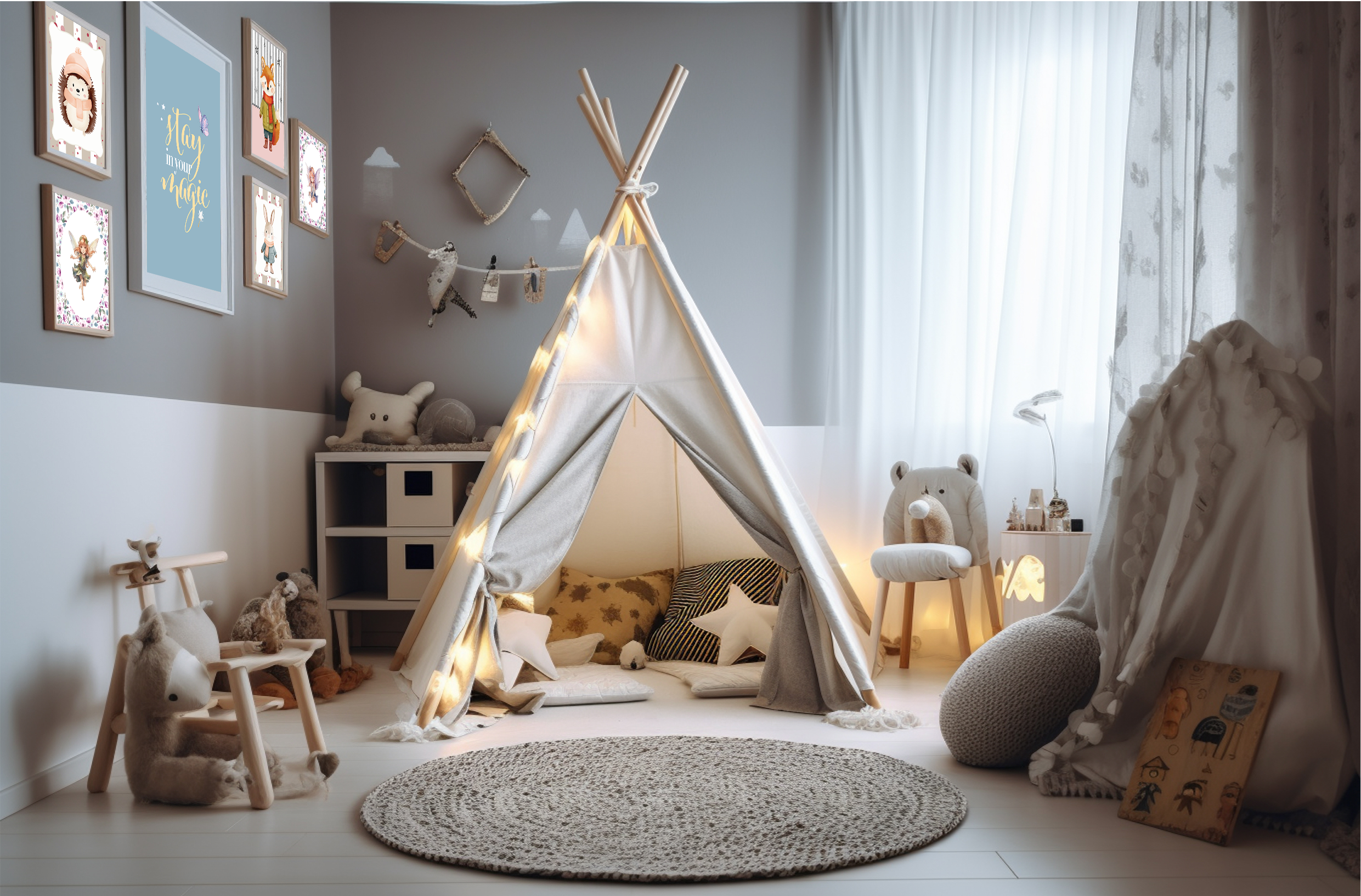
A child's bedroom isn't only a place to sleep. It's where they read stories, build cubby houses, talk to stuffed animals and dream about tomorrow.
The educational approach of Reggio Emilia describes the environment as the "third teacher," recognising that thoughtfully designed spaces can encourage curiosity, independence and exploration alongside relationships and learning experiences.
When thoughtfully chosen artwork becomes part of that environment, it quietly supports those everyday moments. The goal isn't to fill every wall - it's to include pieces that invite curiosity every time a child looks up.
When I design a new collection, I'm not simply choosing colours that work together. I'm thinking about the child who might spend years looking at those pictures.
Will they spark curiosity? Will they encourage storytelling? Will they still feel magical after the hundredth bedtime story?
As a former teacher, I know that some of the richest learning begins with wonder. If a simple picture on a wall inspires one more story, one more adventure or one more conversation between a parent and child, then it's doing far more than decorating a room.
It's becoming part of childhood.
Try this tonight: ask your child what happens next in the picture. There's no right answer - just let their imagination lead.
Ready to bring more wonder into your child's room? Explore the Billie Blake Prints collection and find artwork that becomes part of their next story.